
Meet the Chef: Colin Mason
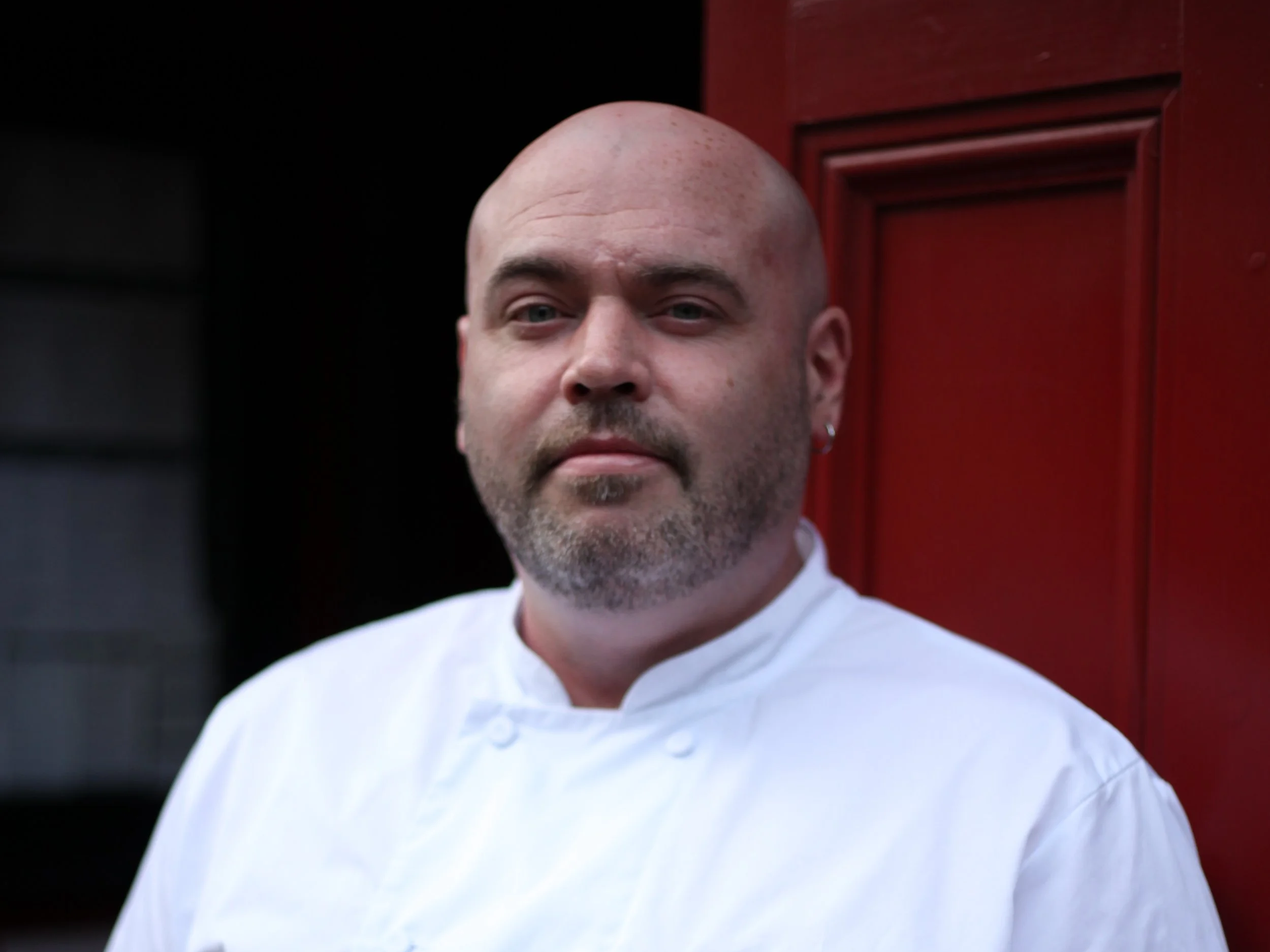
Colin didn't grow up dreaming about food. He grew up eating San Giorgio rigatoni with a jar of Prego dumped over it, two or three nights a week in West Chester, Pennsylvania. Nobody in his house talked about food as anything but dinner.
The kitchen found him at Milton Hershey School, where he took cooking classes and actually cooked, for real, for the other kids in the student homes he lived in. He graduated in 2005 and went straight to working at the lunch counter of Gryphon Cafe in Wayne. The owner, Rich Mattis, had cooked for real before, and he wasn't interested in training a line cook who just followed a recipe card. He wanted Colin to taste everything. Smell it. Put his hands in it. Watch what two ingredients did to each other once they touched. Colin never stopped.
He never went to culinary school. He worked for free instead, at a friend's restaurant, for nothing but the education. The friend was Jonathan Mims. The restaurant was called Mims, then it wasn't, it became a British pub called The Freehouse. That was his real break. No diploma, just a job where he made sure he learned every shift.
Then Philadelphia. Colin says his best food memories all happened at work, never at home, and Fork and Kanella is where most of them live: the smell of a specific stock, a plating mistake he made forty times before he stopped making it, the particular exhaustion of a Friday service. Konstantinos Pitsillides ran that kitchen at Kanella and helped Colin connect the dots out of everything he'd half learned in five other places, the kind of realization every cook actually cares eventually reaches on his own.That's where he stopped being someone who worked in kitchens and started being a real cook.
Ask him what he actually wants to eat and the answer comes fast. Mediterranean, whatever's fresh. HIs go-to order when he’s out: a Cubano the second he sees one on a menu. Raw fish from anyone he trusts, crudo or poke or sashimi. On his book shelf: White Heat, a “cookbook” but more a manifesto by Marco Pierre White. Gabrielle Hamilton's Prune, where her rustic, no-nonsense food influenced so many chefs working today.. Fergus Henderson's Nose to Tail, built around using the whole animal, not just the good parts. He plays guitar. He rides motorcycles. He reads almost nothing but music biographies. His knives are carbon steel Misonos, and he's had them long enough that they've worn into the exact shape of his hand.
Five years ago he found himself overthinking his food, forcing ideas onto a plate because he wanted the plate to say something about him. He doesn't do that anymore. Humility over ego, he says. Craftsman, not artist. This is what he's carrying into 2027, too. Not a plan, a habit: getting it right instead of getting it new. Staying honest to something Irish without pretending he isn't in Lancaster County, using what's grown here, cooking for the people who live here. Same habit that got him this far. He's just better at it now.
