
The Pairing That Was Never Planned
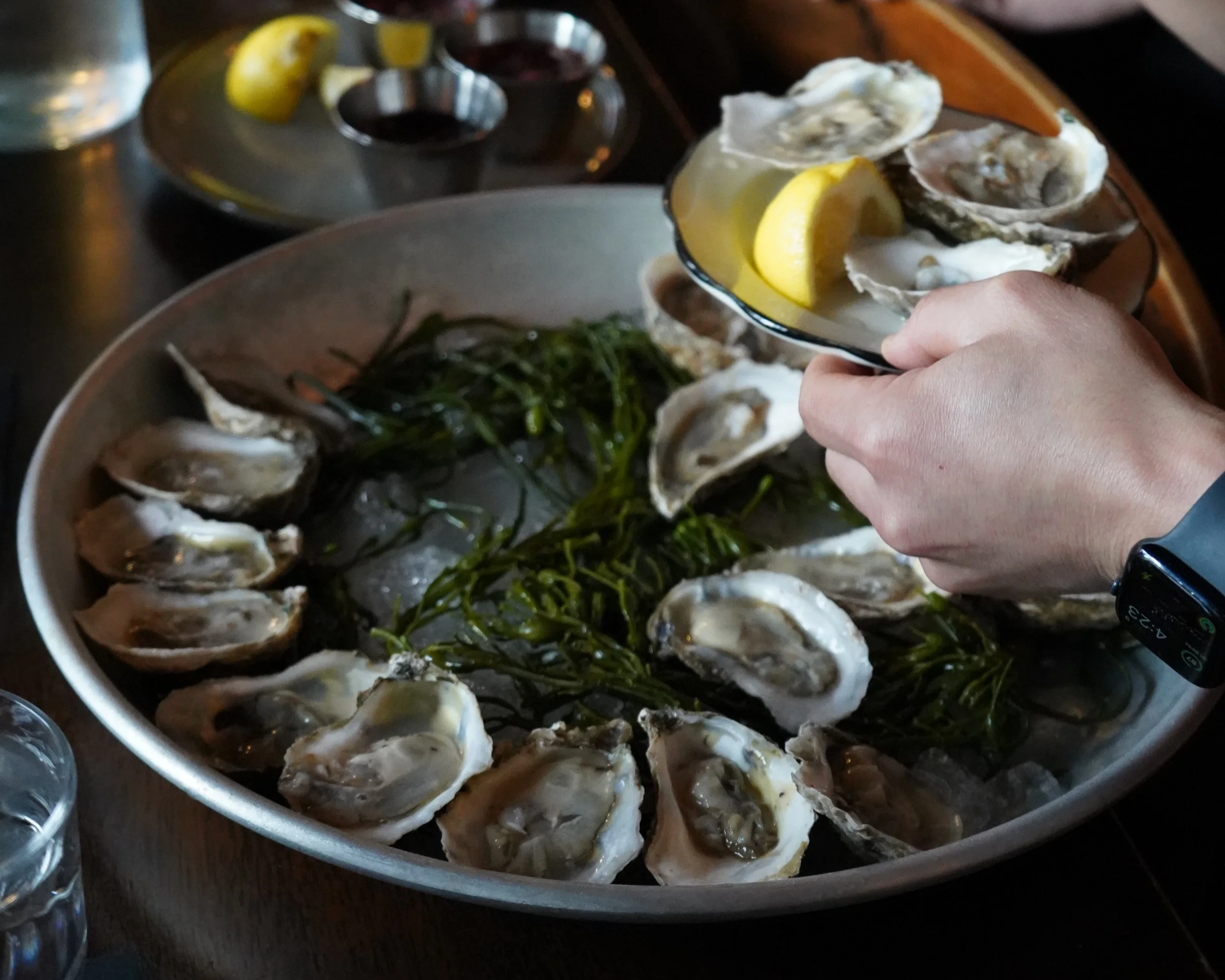
An oyster was not fancy. For most of the nineteenth century it was gutter food, cheap enough to stretch a beef pie when the butcher ran short, cheap enough that even Dickens took note of poverty and oysters traveling together. Londoners ate through seven hundred million of them in 1864 alone. Bartenders set bowls of them out the way you'd set out peanuts now, something to work through between pints, nothing precious about it. The stout next to them wasn't precious either. It was fuel: dark, heavy, cheap, built to survive the cart ride from brewery to bar. Nobody dreamed up a pairing. Poor people ate what was in front of them and drank what was in front of them, and that happened to be oysters and stout.
The beer took its own road to respectability. Porter showed up in London around 1720, named for the dockworkers who drank it by the gallon. By 1799 Arthur Guinness had given up on ale entirely and bet the brewery on porter. A stronger batch got tagged "stout porter," the porter eventually dropped off, and by 1849 Guinness was shipping Foreign Extra Stout strong enough to survive a month at sea, something the oysters themselves could no longer manage. Ireland's oyster beds, dredged with no limit for a hundred years straight, were dead by 1903. The cheap food ran out first.
Scarcity is a hell of a marketing department. By the 1930s Guinness was running ads lifted straight from Lewis Carroll, walrus and carpenter still working their way through a beach of oysters sixty years after the poem, telling drinkers Guinness and oysters were good for them. The slogan outlived the joke. Galway threw its first Oyster Festival banquet in 1954: thirty-four people, a room in Clarenbridge, more oysters than anyone needed. What gets called a classic pairing today started as neither classic nor a pairing. It was just two cheap things sitting next to each other until one of them stopped being cheap.
-Paul
