Fish & Chips Was Never Really British
The story starts with people being expelled. 1492. The Spanish Crown issues the Alhambra Decree and some 200,000 Sephardic Jews have four months to leave or convert. Many go to Portugal. Portugal then issues its own edict in 1496. The ones who stay become conversos; outwardly Christian, privately not. The ones who leave scatter across the Mediterranean, eventually England.
They bring a dish with them. Pescado frito: white fish, usually cod or haddock, fried in a thin coat of flour or matzo meal. The logic was practical before it was culinary. Cooking was forbidden on the Sabbath, so fish was prepared on Friday afternoon. The batter sealed in moisture, and the fish could be eaten cold the following day without losing much in the translation. What began as religious necessity became habit, then pleasure, then identity.
By the 17th century, Sephardic Jews had settled in England's East End, and they were selling fried fish in the streets, carrying trays hung from leather straps around their necks. Thomas Jefferson, on a visit to London, described eating fish "in the Jewish fashion" and apparently approved. The dish had already escaped its origins and entered the general culture. Though it hadn't yet found its other half.
Chips arrived separately, through different hands. Fried potato had been making its way across Europe. The Huguenots, Protestants fleeing France in the 17th century, are often credited with bringing the concept of fried potato to England's East End. Wherever the precise origin sits, by 1860 both fried fish and fried chips were being sold on London's streets by different vendors, often steps apart. The combination that seems obvious in retrospect took longer than it should have.
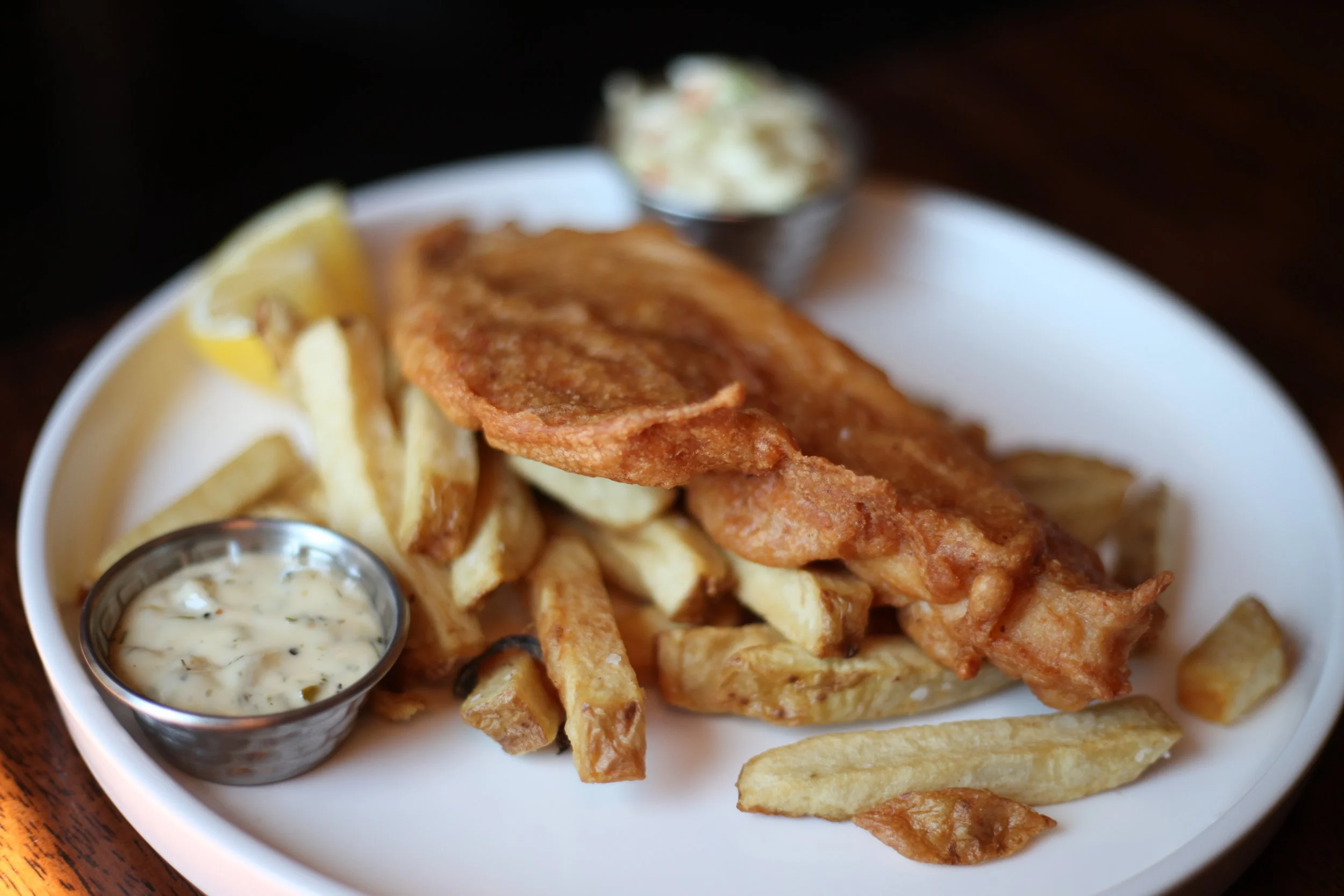
The person most often credited with uniting them was a 13-year-old named Joseph Malin, an Ashkenazi Jewish boy from East London whose family were carpet weavers and sold chips from their home. Around 1860, he opened what is generally considered the first proper fish and chip shop in Britain. The dish that would eventually be called Britain's national food was, from the very beginning, the product of people who had been driven from somewhere else.
None of that history had made it to Ireland yet. What had made it to Ireland, stepping off a ship in the seaport town of Cobh, located on the Southern end of Ireland, sometime around 1882, was a man named Giuseppe Cervi.
The story of Cervi…he was bound for America, another Italian heading to the same ports that were pulling people across the Atlantic by the millions. The ship stopped in Cobh and Cervi disembarked. Whether by accident or intention he didn't get back on. He walked north. The distance from Cobh to Dublin is roughly 160 miles, and he covered it on foot.
He found work as a laborer. He saved. He bought a coal-fired cooker and a handcart and started selling chips outside Dublin's pubs at closing time, targeting exactly the moment when people are most willing to eat something hot from a stranger's cart. It worked well enough that he eventually secured a permanent spot (a short walk from Trinity College).
What's worth sitting with is what Cervi had landed in. Ireland in the 1880s was an island surrounded by extraordinarily productive waters: cod, haddock, herring, mackerel and had managed, through a combination of history, poverty, and theology, to have a deeply complicated relationship with all of it. Ireland has had little or no history of exploiting the sea compared to their European partners. Most of what came out of Irish waters got exported. What stayed behind on Irish plates was cod, mainly, and it arrived on Fridays, and it arrived not as something desired but as something required.
The Catholic Church had long mandated abstinence from meat on Fridays. Fish was the permissible substitute, cold-blooded, theologically exempt, practically available. But the framing mattered. Fish was positioned not as an equal to meat, but as a substitute, both sub-par and second-grade. Friday fish wasn't a celebration. It was a reckoning. You ate it because you were supposed to, and the eating of it confirmed your place in a particular moral order. For generations, the Irish relationship with fish was less about pleasure and more about obligation.
And then the Italians arrived with a fryer and changed the terms entirely.
The chipper did something the Friday fish supper at home had never managed: it made eating fish feel like a choice. The batter was crisp. The chips were hot. You ate it standing up, or walking home, or sitting on a wall with the bag balanced on your knees and the vinegar soaking through the paper. It had nothing to do with penance. The religious logic that had made fish mandatory on Fridays, the same logic that had made fish feel like punishment, now quietly made the chipper the busiest business in town one day a week. The Italian chip shop owners understood this perfectly. They were majority Catholic and encouraged their customers to abstain from meat on Fridays. It wasn't cynical. It was simply accurate. The abstinence rule and the fish and chip shop were made for each other, and the Italians had arrived at exactly the right moment.
By the early 1900s, there were twenty Italian-owned chip shops in Dublin, serving a city of around 290,000 people. People were coming in after Mass, after the pub, after the match. They were ordering “one and one”. They were eating fish because they craved it.
-Paul
